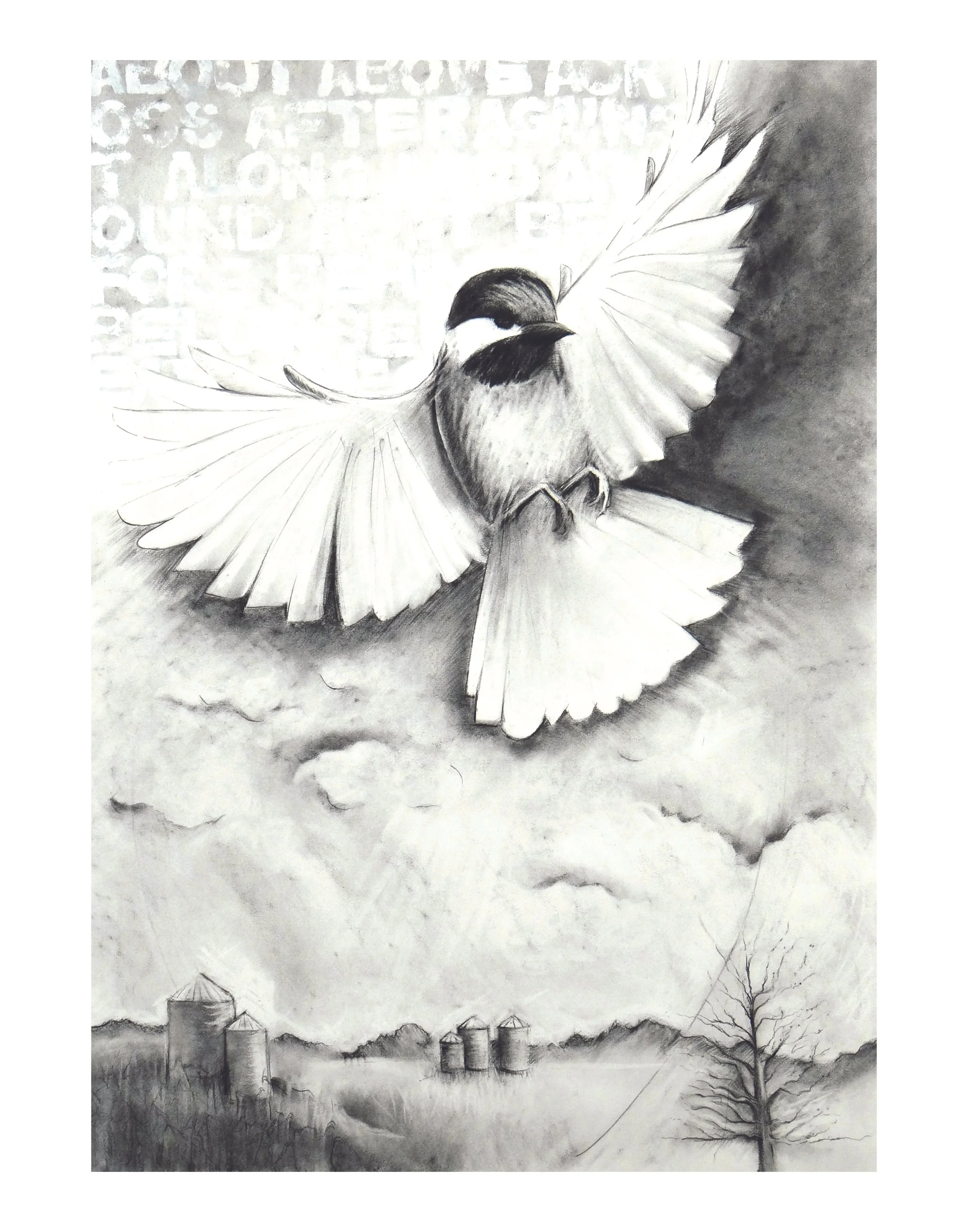
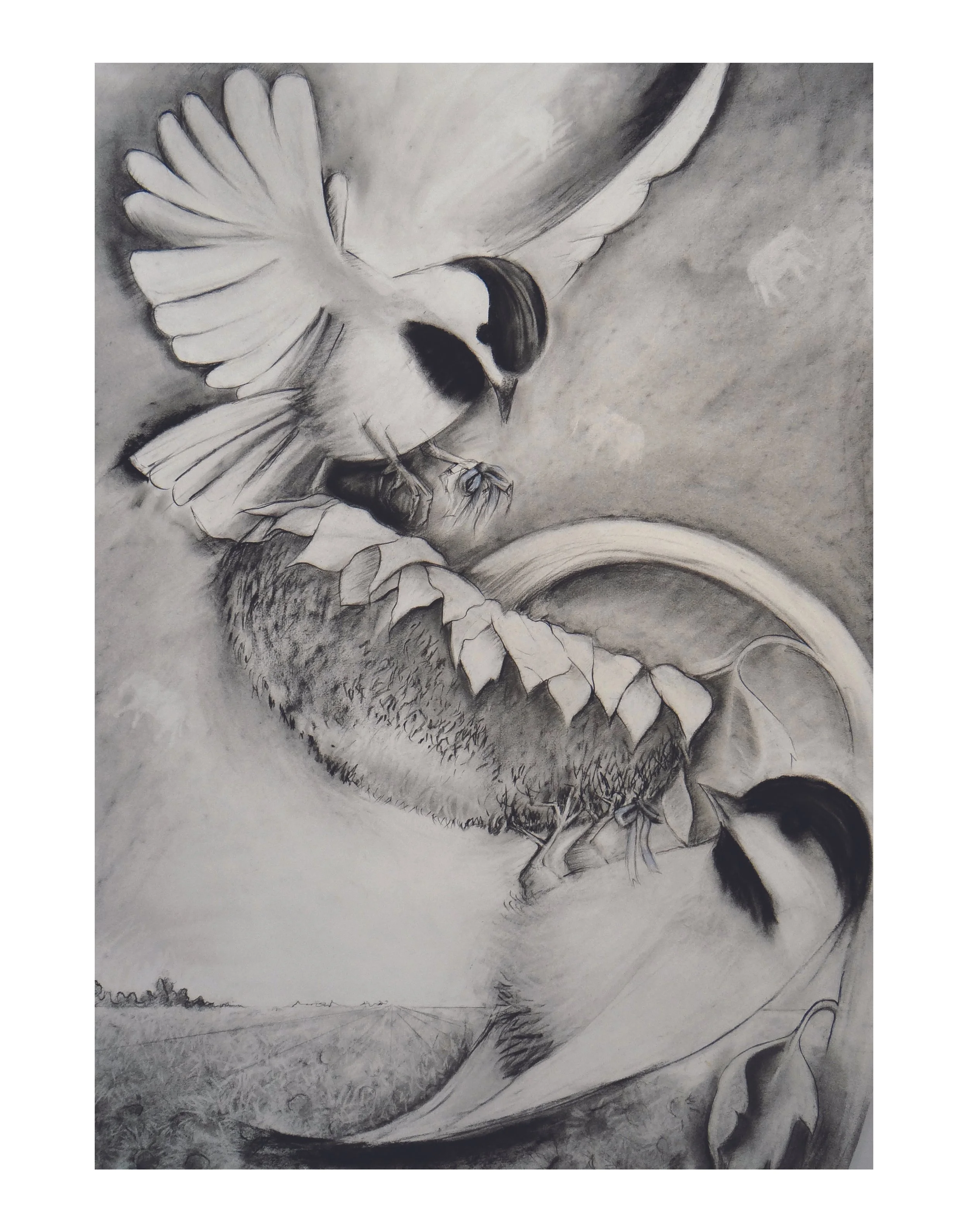
A Chickadee Cache
In researching human memory and comparing ours with that of other species, I discovered the great skills of chickadees — widely regarded as the “memory masters” of the bird world. Their abilities are astonishing and offer a way to think about memory that, for me, is both scientific and magical.
Seasonal Brain Expansion
Every autumn, chickadees begin scatter hoarding: hiding thousands of seeds, nuts, and insects in tiny, dispersed caches across their territory. To survive winter, they must remember each location even under deep snow. To accomplish this, their hippocampus — the region of the brain responsible for spatial memory — expands by up to 30%. In spring, when food becomes plentiful, this extra tissue is pruned away. Their biology is a cycle of remembering and forgetting, growth and release.
Human Memory
Humans rely on encoding, storage, and retrieval — processes that feel clinical when described but deeply personal when lived. We tie strings around fingers, repeat phrases, sing things aloud, write them down, rehearse them, photograph them, ritualize them. We build our own caches: notes, reminders, objects, habits. And yet our memory slips.
The Work
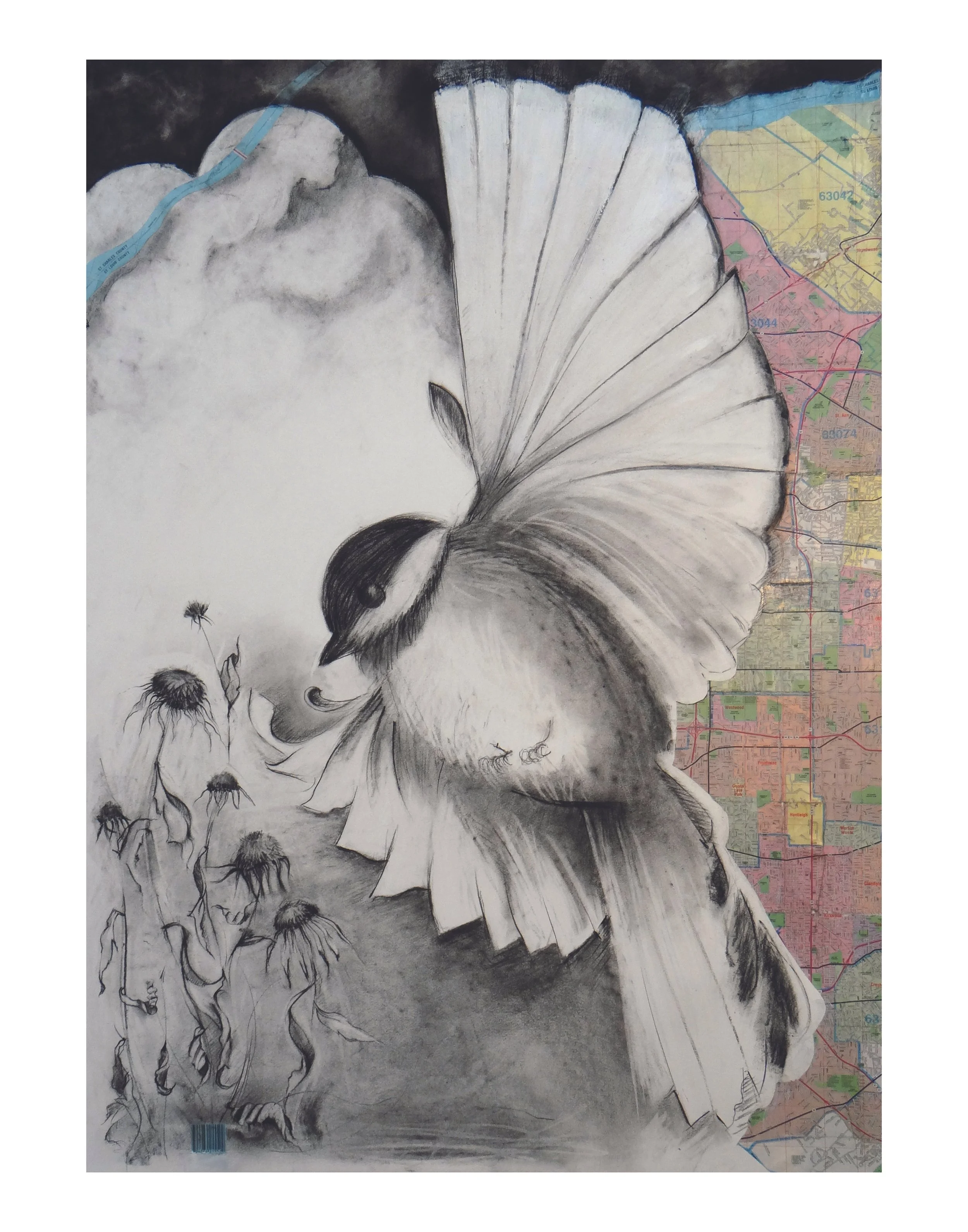
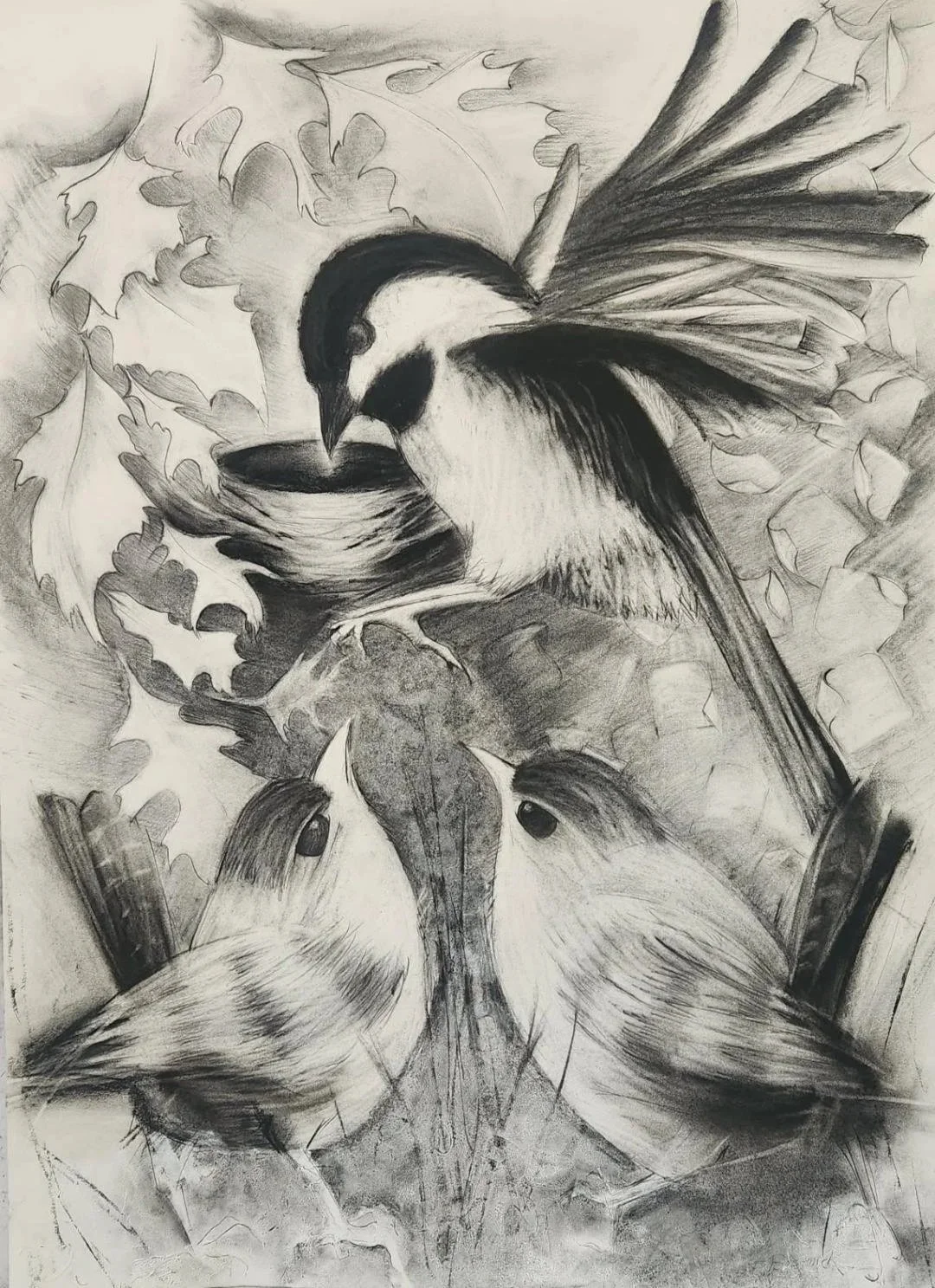
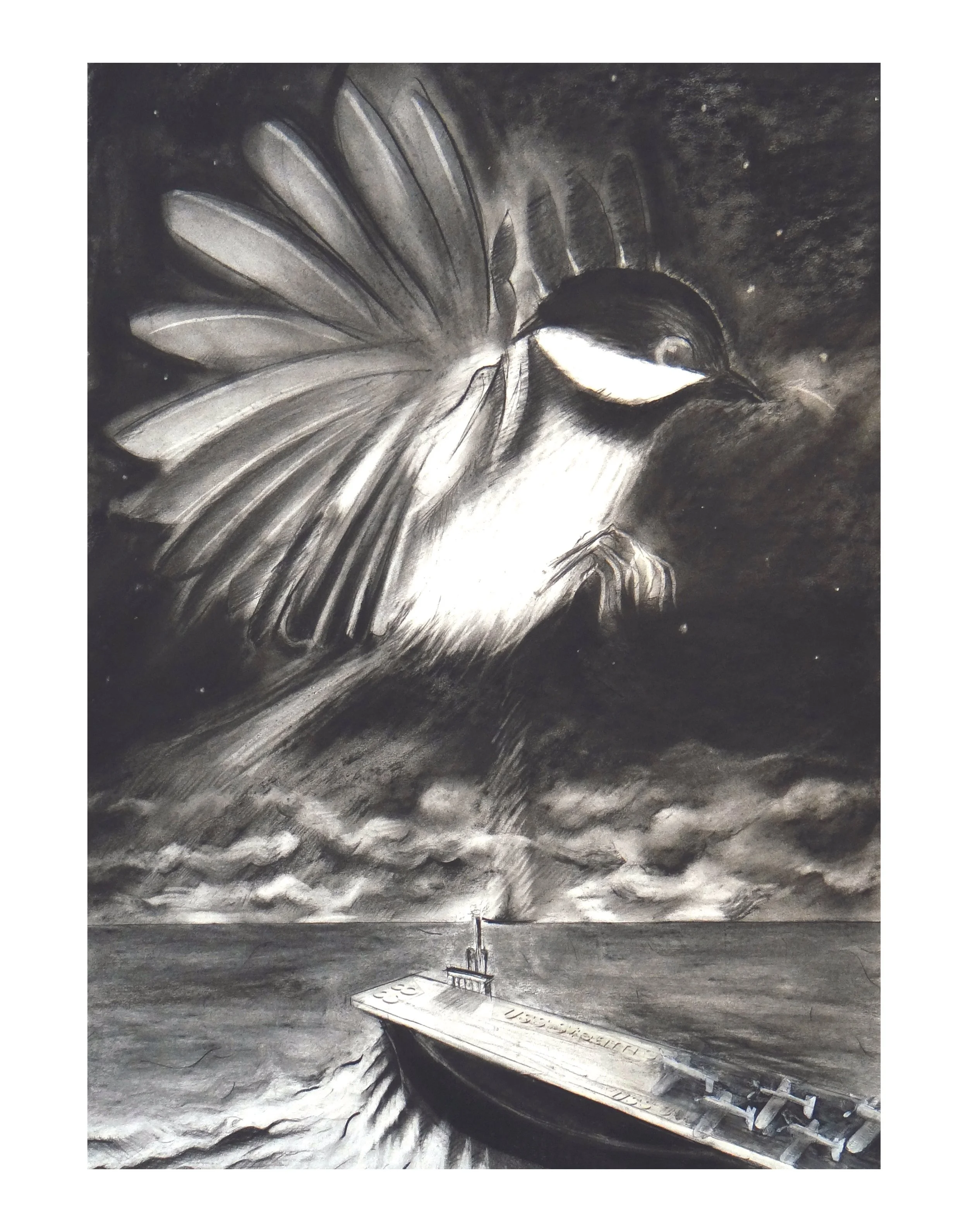
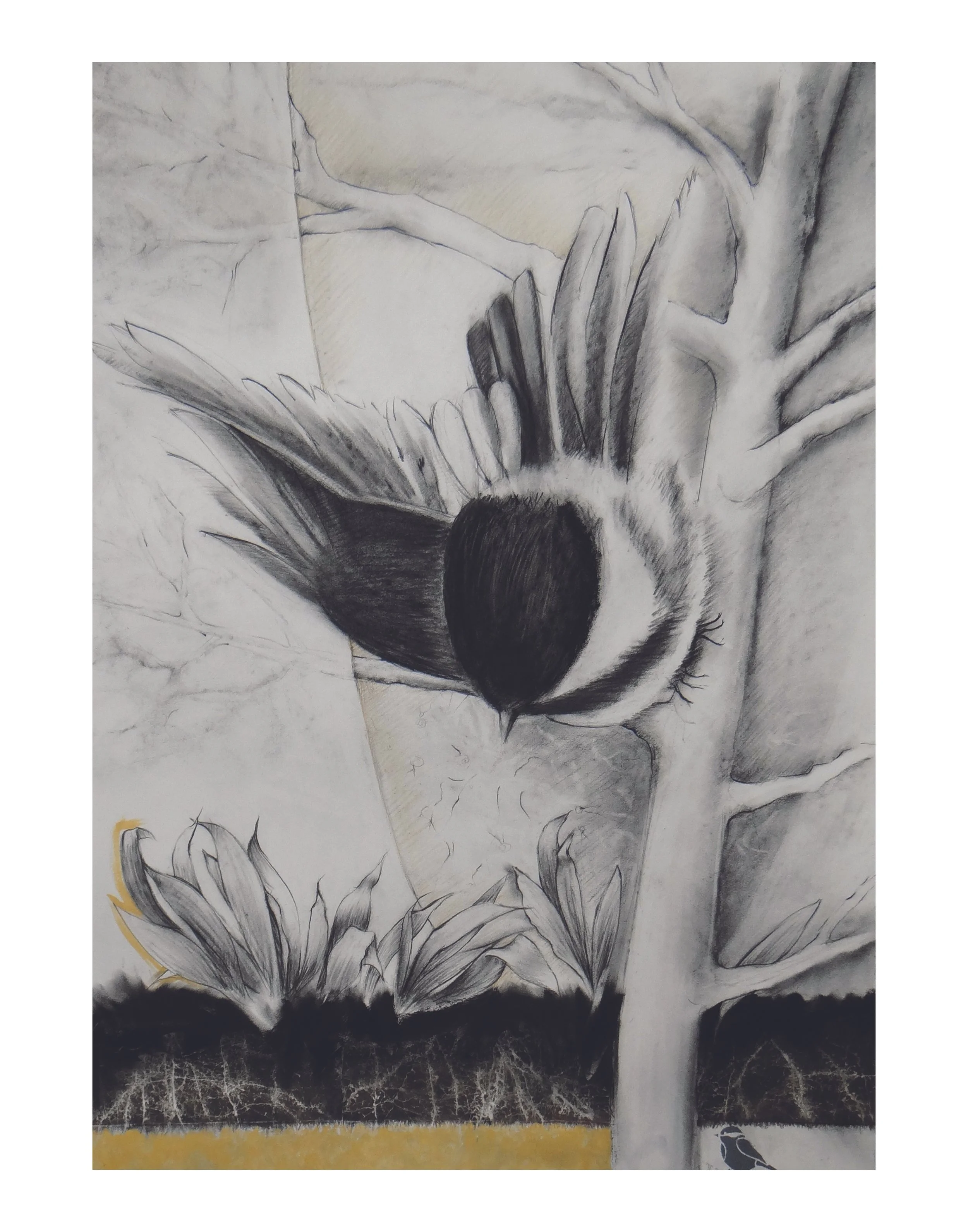
While immersed in the fear of forgetting, the tenderness of remembering, and the strange ways the mind reshapes itself over time; the chickadee became a kind of guardian angel, a small winter sentinel watching over the caches we scatter throughout our lives.
Though clay is my primary medium, drawing has been my foundation. Using charcoal on cotton / fibrous paper is, for me, a lot like working with clay. The materials respond with immediacy to touch.
These drawings, created alongside a series of ceramic pieces, are my reaction to what I’ve learned and experienced around memory loss. Not my own memory loss, or at least I don’t think so, but the dementia that devastated our fathers and mothers and is creeping into the lives of friends.